Rapid strategic planning for school investment decisions
Dulwich College Seoul
Overview data:
Dulwich College Seoul had more than 150 possible campus investment opportunities and needed a fast, rigorous way to decide which would make the greatest difference to learning, wellbeing and community experience.
Type of work: Short-cycle strategic planning, investment strategy, campus prioritisation.
Challenge: Prioritising 150+ possible investment opportunities.
NoTosh role: Stakeholder insight, strategic analysis, co-design, decision-making framework.
Outputs: Opportunity matrix, investment decision framework, phased roadmap.
Best for: schools needing rapid strategy before major investment, campus change or full strategic planning.
Challenge and context: too many choices, unclear priorities
The College was presented with more than 150 possible investment opportunities, each carrying different levels of cost, disruption and educational benefit. Large-scale projects risked consuming resources that might be better spent elsewhere, while smaller, high-value improvements risked being overlooked. Leadership needed a clear, rigorous way to weigh these competing ideas and decide where investment would make the most difference to learning and wellbeing.
Insight and approach: prioritising change through what matters most
This was a focused, short-cycle strategy project.
Rather than beginning with a long strategic planning process, NoTosh helped the College answer a more immediate question:
Where should investment go if the goal is maximum impact on learning, wellbeing and community experience?
We combined targeted stakeholder insight during an onsite visit, operational analysis and strategic facilitation to help leaders move from a long list of possibilities to a clearer set of choices.
The work included:
- observing and reviewing more than 150 potential investment opportunities
- exploring how students, staff and families experienced the campus day to day
- carrying out targeted interviews with students, teachers, parents and operational staff
- identifying patterns, tensions and overlooked opportunities
- balancing educational impact, cost, disruption and feasibility alongside potential reputation value
- creating a hierarchy of projects, from immediate improvements to longer-term opportunities
- shaping a decision-making framework for future investment
The process gave the College a way to compare very different ideas fairly, without letting the biggest, loudest or most expensive options dominate the conversation.
What changed
The work helped Dulwich College Seoul move from a list of possibilities to a strategic roadmap.
The final output was a phased investment roadmap and decision-making framework, helping leaders compare major capital projects with smaller, high-impact improvements.
The final output gave leadership:
- a clear hierarchy of investment opportunities
- a framework for comparing cost, impact and operational feasibility
- a stronger understanding of what mattered most to students, staff and families
- a way to balance major capital projects with smaller high-impact improvements
- a phased roadmap for future investment
- greater confidence that resources could be directed towards changes with the strongest educational value
Some of the most valuable opportunities were not the largest projects. The process helped surface smaller changes with the potential to shift daily experience, strengthen community and improve the conditions for learning.
Why this matters
Strategic planning is often imagined as a large, slow and comprehensive process. Sometimes that is exactly what an organisation needs, but there are also moments when leaders need a shorter, sharper piece of strategy work: a focused process that helps them make a high-stakes decision, prioritise investment, or move forward before a full strategic plan is possible.
This project showed how a short-cycle strategic planning process can help a school make better decisions quickly, without reducing strategy to a checklist.
NoTosh’s role
NoTosh brought together strategy, user insight and educational design.
We helped the College look beyond the physical estate and consider the full experience of learning and community life: how people move, gather, collaborate, focus, belong and thrive.
Campus investment is never only about buildings. It is about what people do in them and the vision for doing things differently.
By combining community insight with a clear decision-making hierarchy, we helped Dulwich College Seoul identify priorities that were strategic, sustainable and rooted in the lived experience of the school.
Need to make a strategic decision quickly?
NoTosh helps schools, universities and education organisations use evidence, community insight and practical decision-making frameworks to move from too many possibilities to focused choices. Talk to us about short-cycle strategy
Contact UsUseful when you need to move quickly
This kind of short-cycle strategy work is particularly useful when a school is:
- facing too many possible projects
- preparing for campus investment or redevelopment
- trying to prioritise limited budget
- weighing quick wins against long-term capital projects
- deciding what should happen before a full strategic plan
- aligning leadership around investment decisions
- looking for evidence before committing to a masterplan
- trying to connect learning, wellbeing, community and space
What you promise matters: make your manifesto
Bring your team together and explain what you aim to do every day with a collaborative manifesto
Find out more
Creating a school from scratch
Colina Learning Center, Romania
Colina’s purpose is to support everyone to learn how to thrive in life, and their vision is to build a learning culture throughout every home. We helped them devise a dual curriculum for their school – for children and adults.
Find out more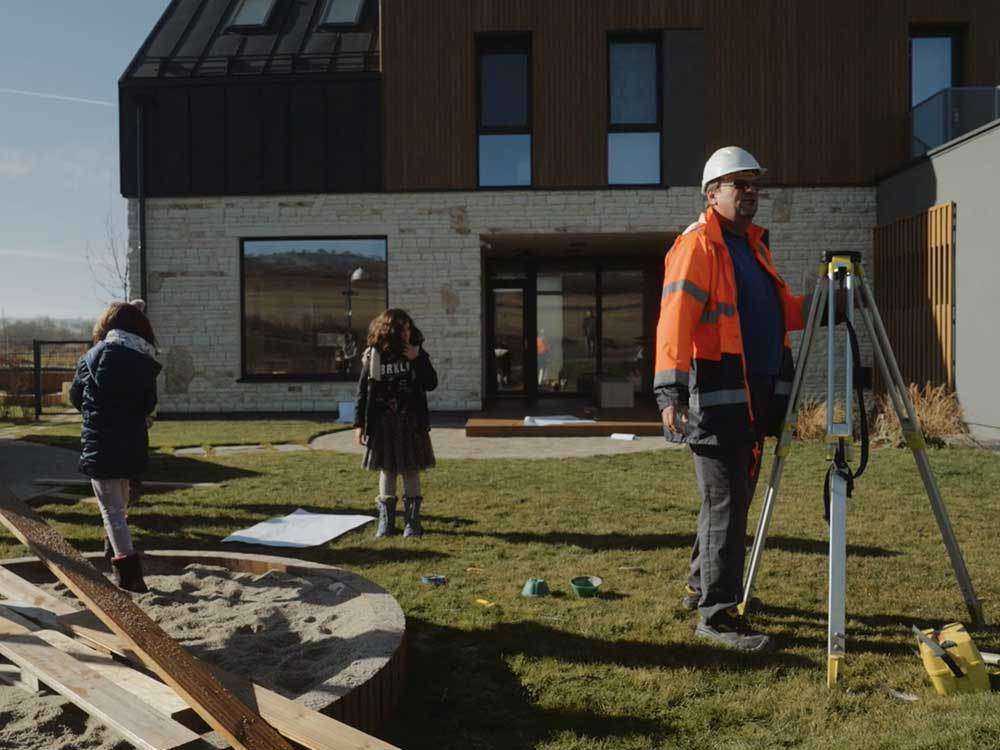
Designing a regenerative learning village together
United World College South East Asia (UWCSEA), Singapore
UWCSEA partnered with NoTosh to define a values-led vision for its new Tengah campus, aligning learning, wellbeing and sustainability into a coherent foundation for future design.
Find out more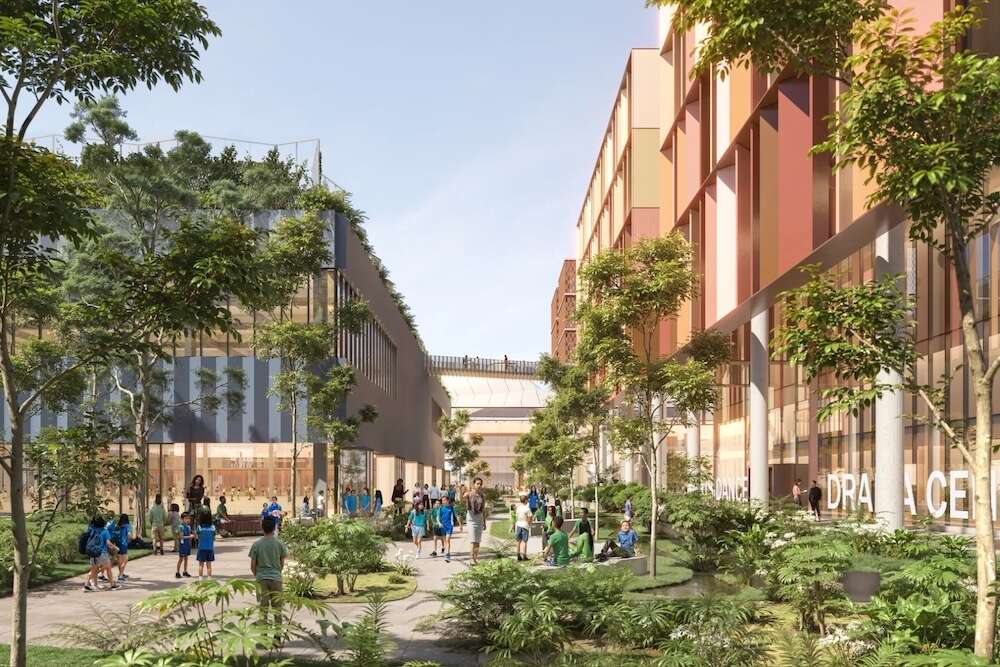
Embedding STEM through place, practice and purpose
South Australian Government (STEM Learning Environments
The South Australian Government partnered with NoTosh to develop a scalable approach to STEM learning environments that supports teacher confidence, student agency and system-wide consistency.
Find out more