Design for trickiest customer on the worst day
At a glance
Question: What happens when you design a school or strategy for the most demanding scenario?
Central idea: Testing assumptions and designing for people with the least access can create something more useful and resilient for everyone.
Example: Joseph Bazalgette’s decision to allow for the unforeseen in London’s sewer system.
For: School leaders, boards and teams making decisions about strategy, services and spaces.
At the turn of the 1800s, London’s population doubled, making it the biggest city in the world. But it was designed for a population half its size. People had to put their poo wherever they could. So there were 200,000 cesspits all over the city.
They spent a little bit of money diverting the overflowing cesspits into the River Thames. That’s the same river from which they drew drinking water.
Then there was a cholera outbreak. And another one.
Tens of thousands died.
Then in 1858 the problem gained a name: The Big Stink. The effluent-filled Thames flowed past Parliament, and the curtains to the debating chamber had to be soaked in chlorine of lime in an effort to block out the smell. Not even that worked.
So Parliament commissioned a sewerage system to deal with it.
Chief engineer on the project Joseph Bazalgette designed a system made entirely from bricks, using the innovative (and expensive) Portland cement that continues to retain the walls to this day.
He worked out the size of sewerage pipes required for the population of London at that time.
Then he doubled the size of them.
Double the size. Double the cost.
“We’re only going to be doing this once,” he said. “We’d better allow for the unforeseen.”
Parliament ended up contributing a billion pounds in today’s money to build a new sewer system that could cope with the unforeseen.
When we do strategy work, or get asked to rebuild a school, we want to build for the unforeseen. It costs less in the long run.
That means testing the assumptions of what’s being done today.
Sometimes people think that having their assumptions tested is a vote of no confidence in their thinking. Nothing could be further from the truth.
When you look at things with an engineer’s eye, you try to do things in the best way possible, in a manner that will enable the things to last as long as possible. Engineers are like that: they like being able to point at what they built for years to come. (Pointing to a pile of rubble is far less impressive).
But most people don’t think like an engineer. They think like a shrewd accountant, trying to skimp and save, to spend the least money they can get away with, and call it ‘efficient’.
In the end, you have to do the job twice over anyway.
So design for the most tricky scenario, and you’ll find that everyone benefits from day one.
Design for the person with least access, and everyone benefits from easy access.
Write for the people whose mother tongue isn’t yours and everyone will understand what you’re trying to say.
Put the budget into something as if you’re only ever going to do this once, and you’ll do it the best way possible.
Try this with your team
Choose one decision you are making now. Who faces the greatest barriers, and what would need to change for the design to work well for them on a difficult day?
Read next: Don’t let fear write the script.
Explore Making Strategy Happen
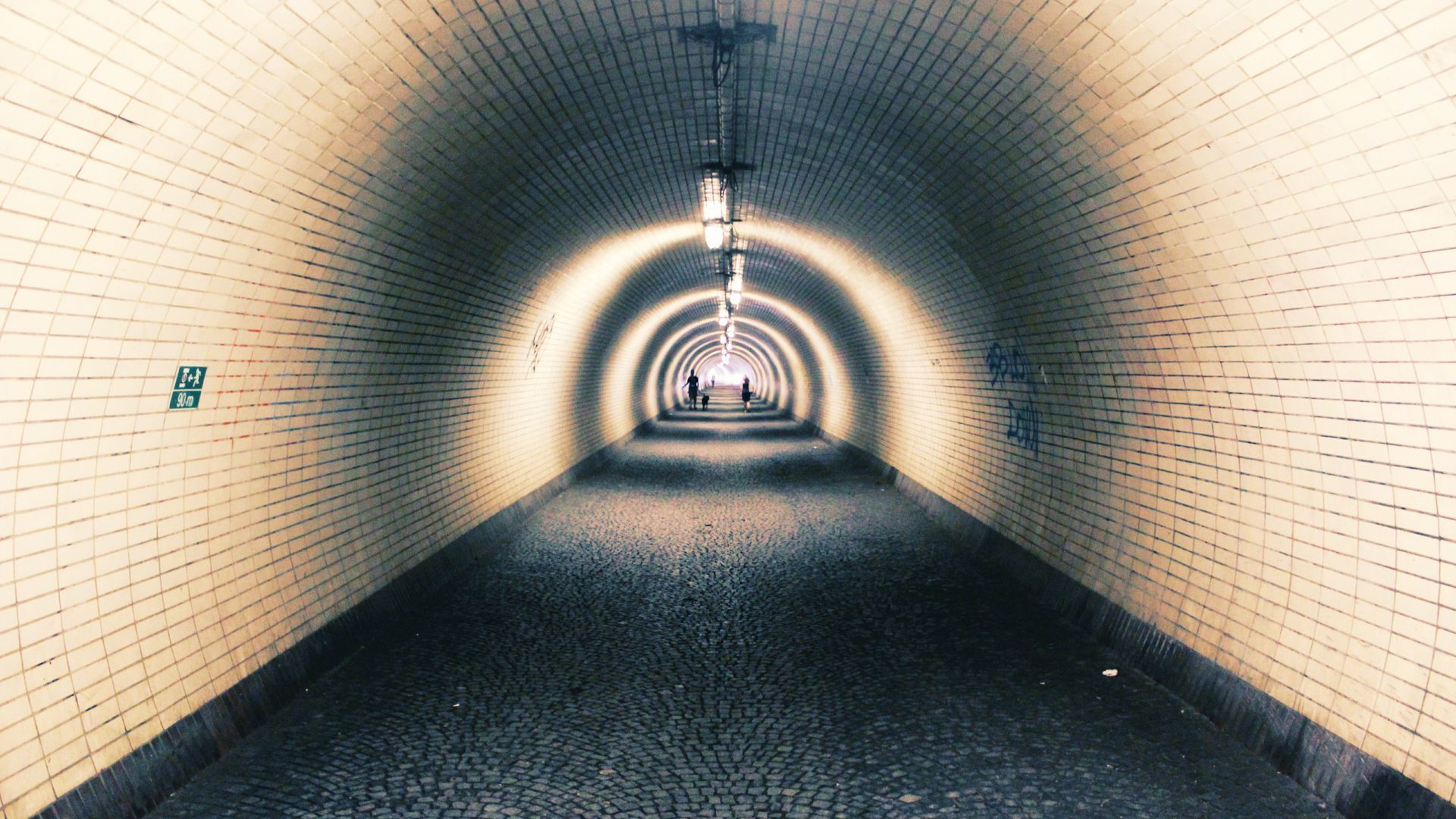
Illustrative tunnel photograph: Paweł L. / Pexels. Background on Joseph Bazalgette and London’s sewer system.