A good school strategy does more than describe ambition. It helps people decide what to do, what to stop doing and how to know whether progress is real.
NoTosh helps Boards, Heads and leadership teams create strategy, Mission, Vision and Values that are distinctive, community-informed and practical enough to guide daily decisions.
Great strategy is a set of clear choices that help people decide what to do next, every day.
NoTosh helps schools, universities and education organisations create strategy that is community-informed, data-informed and practical enough to guide daily work.
Over the past 15 years, we have pioneered a deeply participatory approach to strategy with hundreds of schools and education organisations in more than 70 countries. We bring people into the process early, not after the strategy has already been written down.
The result is a strategy your community recognises, your leaders can explain, and your teams can use.
Where strategy gets stuck
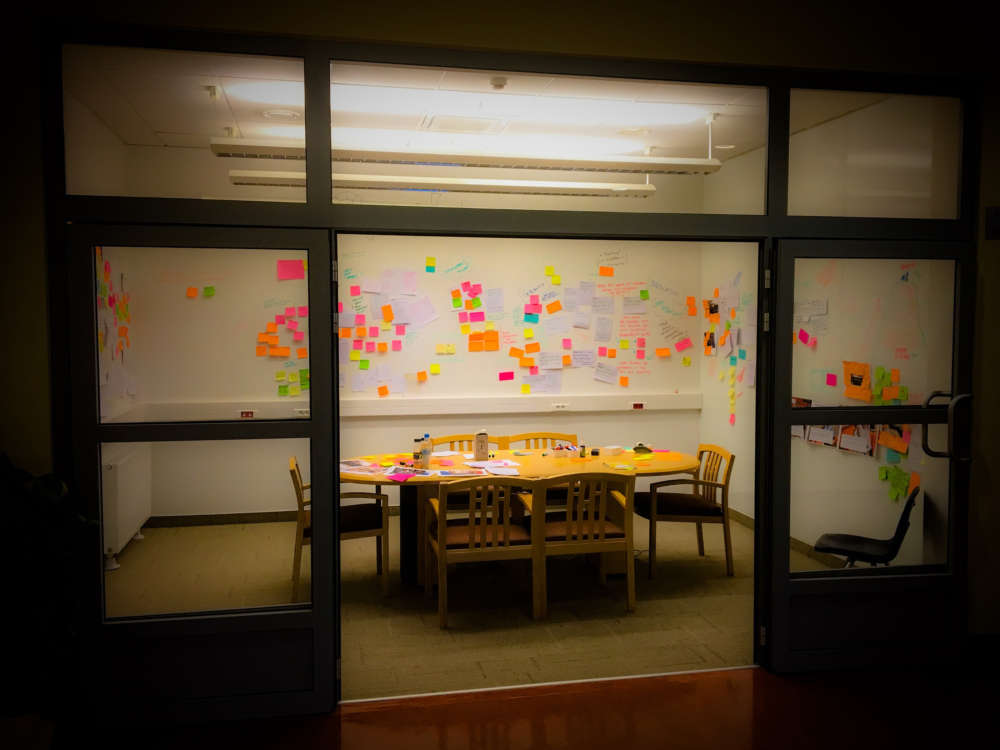
Strategic planning can become a performance of seriousness: surveys, workshops, documents, launch events, then a slow slide back into the same habits. Lots of thunder. No rain.
The plan may be worthy. It may even be beautiful. But if people cannot remember it, use it or translate it into better decisions, a plan alone will not change much.
What NoTosh does
We help leaders make a small number of integrated choices.
We listen deeply, challenge carefully and turn evidence into strategic direction. Our process brings people on board from the start, not at the point where the strategy is finished and ready to be announced.
That means the strategy is shaped with the community, not simply presented to it.
When people call us
Leaders usually come to NoTosh when something important needs to take shape:
A strategic plan is ending and the next one needs to carry real weight.
There is about to be a change in Head, CEO, Vice-Chancellor or leadership team.
The Mission, Vision or Values no longer feel useful for everyday decisions.
The Board or senior team needs alignment before making major decisions.
Too many initiatives are competing for attention.
The organisation has grown, shifted or changed, but the strategy has not caught up.
A campus, faculty, school or system needs a direction people can gather around.
The community needs to be involved without turning the process into a referendum.
We design the process around the moment you are in.
Sometimes that means a full strategic planning process. Sometimes it means refreshing Mission, Vision or Values. Sometimes it means a bridging strategy, Board retreat, Objectives and Key Results process or an implementation sprint.
The discipline stays the same: we'll design focused choices, shared ownership and pragmatic action for the months and years ahead.
A community-informed process: the Design Team
The Leadership Team and Board hold responsibility for the strategy. But they make better choices when they are working from better evidence.
At the heart of our process is a Design Team: a diverse group of students, staff, leaders, parents and community members who help gather insight from across your organisation.
We help you form a team of around thirty people, chosen because they can reach different parts of your community and challenge one another’s assumptions.
We train them to listen carefully, gather human-centred insight and surface the stories that surveys and spreadsheets often miss. We can then follow up with deeper interviews on the ideas, tensions and opportunities that emerge.
This gives leaders richer evidence, broader perspective and a stronger foundation for strategic decision-making.
Data, but made useful
Schools, universities and education organisations already hold huge amounts of data: surveys, assessment data, perception data, inspection reports, accreditation findings, demographic information, market insight and previous recommendations.
Too often, that data sits in separate reports, each with its own conclusions and demands.
We help make sense of it.
We review the evidence, look for patterns, identify tensions and translate the noise into concrete strategic choices. Not vague themes. Not a longer wishlist. Real choices that leaders can weigh, test and decide between.
This is about creating a strategy that shapes every decision, including the ones years from now that you don't even know you'll have to make.
A plan tells people what may happen.
A strategy helps people decide what matters when the world changes.
Our approach is inspired in part by strategist Roger Martin’s view that strategy is a set of connected choices. We help leaders work through five core questions:
What do you want?
What kind of future are you trying to create? What should be different, distinctive or newly possible because this strategy exists?
What will you do?
What are the small number of big choices that will move you towards that future?
How will you do it?
What approach will make your work distinctive, sustainable and right for your people?
What will you build on?
Which capabilities, relationships, resources, spaces and strengths already exist in your community?
What systems will make it last?
What routines, habits and structures will help the strategy survive changes in people, pressure and circumstance?
These questions help leaders move beyond broad aspiration and towards a focused set of choices.
Planning still matters
When you've got a clear strategy, we can plan.
Most organisations already have ways to plan: annual development plans, departmental goals, accreditation cycles, improvement plans, budgets and project lists.
The problems begin when there's no strategy strong enough to focus those plans.
Once the strategic choices are clear, planning becomes easier. Teams can create annual goals, termly priorities or short-cycle implementation sprints that connect to the bigger direction.
That might mean:
- a small number of long-term commitments
- annual goals that keep the work moving
- termly implementation sprints for cross-functional teams
- OKRs that help leaders track progress
- regular routines for learning, adjustment and accountability
Little and often works better than grand and forgotten.
Early progress matters. So do early mistakes, when there is still time to learn from them.
What we can help create
Every project is shaped around the organisation, but our strategy work can include:
- full strategic planning
- Mission, Vision and Values refresh
- community engagement and listening
- Design Team training
- data analysis and synthesis
- Board and leadership workshops
- strategic choices and priorities
- Objectives and Key Results
- milestones over the medium-to-long term
- implementation routines
- launch and communication support
Talk to us about what you're thinking, and we'll work together create a proposal around what you need, where you are, and how ready your community is for the work.
The NoTosh approach to strategic planning
Strategic Planning with NoTosh is always achieved through a collaborative community process. We create strategies that don't need to get 'buy in' - they already have it from the start.
Find out more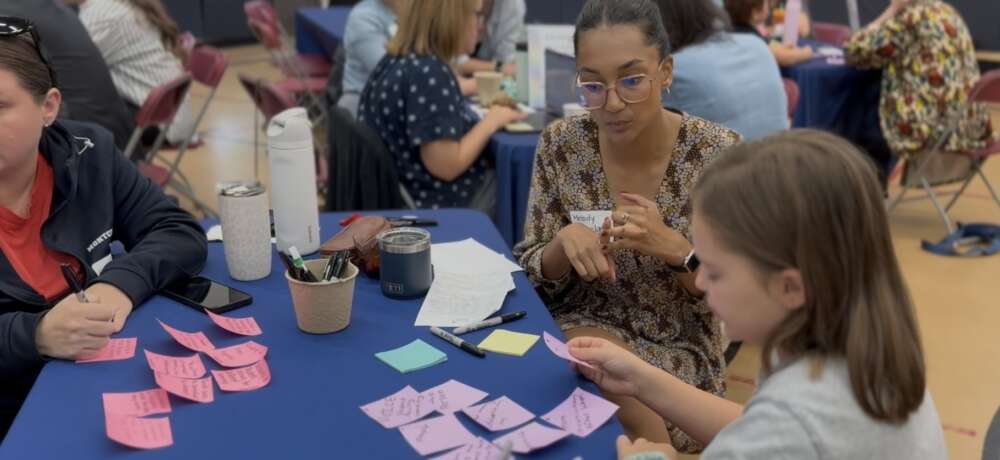
Rapid strategic planning for school investment decisions
Dulwich College Seoul
How NoTosh helped Dulwich College Seoul prioritise more than 150 campus investment opportunities through a short-cycle strategic planning process, community insight and a decision-making framework.
Find out more
What you promise matters: make your manifesto
Bring your team together and explain what you aim to do every day with a collaborative manifesto
Find out more
Mission, Vision and Values that people use every day
NoTosh helps schools and education organisations refresh Mission, Vision and Values through community insight, strategic facilitation and clear language people can use every day.
Find out more