Reimagining a modern campus for learning
International School of Kuala Lumpur (ISKL)
Why this project mattered
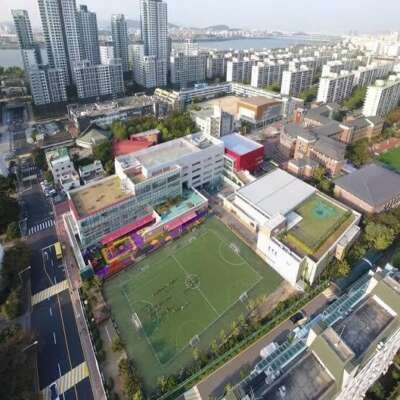
When The International School of Kuala Lumpur (ISKL) opened their new campus, the facilities were modern but often felt more concrete than community. The recently constructed spaces functioned well, but we wanted to ensure that they embodied ISKL’s community values, and opened curriculum innovation in the years to come. Through deep listening and provocation sessions with students, staff, and parents, we developed a Conceptual Masterplan guided by five principles. Most of the ideas we created to make the most of existing space have been taken forward by ISKL with their architect.
The Idea: Design Principles as Decision-Making Tools
Rather than starting with square footage, rooms or buildings, we began with a simple question: what principles should guide every design decision, large or small? Five principles emerged, and together they shaped the most significant moves in the Concept.
Beauty Every Day
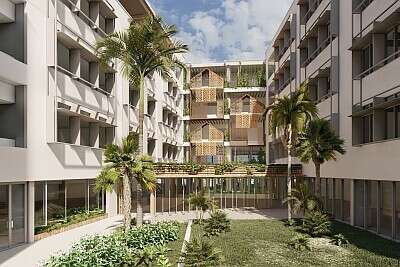
We set out to ensure that nature was not pushed to the edges of the campus, but experienced as part of everyday learning. This led directly to proposals for rooftop gardens, edible landscapes, vertical planting, and shaded courtyards that cool buildings and soften sound. Sustainability became visible through student-managed solar panels and rainwater systems, turning infrastructure into curriculum and beauty into a daily expectation rather than a special feature.

Playfulness at Every Turn
If learning is meant to be challenging, creative, and joyful, then space needs to invite curiosity and risk-taking. This principle pushed design well beyond traditional playgrounds. We proposed adventure play for older students, rooftop activity spaces, corridors that double as galleries for work in progress, and makerspaces that remain active after school and into the evening. Movement, experimentation, and play became legitimate modes of learning at every age.
Learners Lead
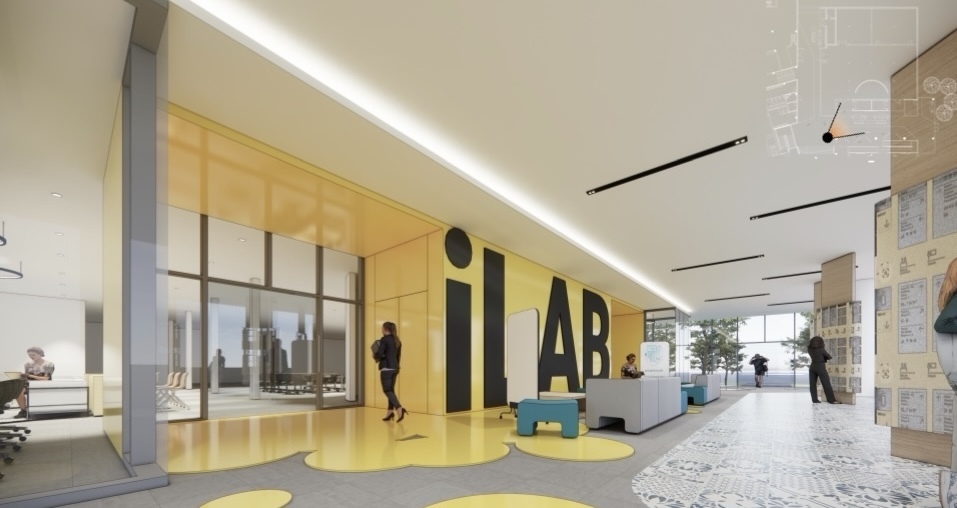
We tested every space against a simple rule: could the smallest person in the room adapt it to their purpose? This resulted in flexible labs, highly visible makerspaces, and learning areas that students could reconfigure quickly. It also shaped the Professional Learning Centre, designed more like a shared lounge than a meeting suite, reinforcing that teacher learning should mirror the agency we expect from students.
Design for Sharing
Instead of designing space around timetables, we reversed the logic. Shared labs, co-planning hubs, flexible cafés, and adaptable common areas were designed to encourage learning to spill across subjects, age groups, and roles. Libraries, canteens, and circulation spaces became places where collaboration happens by default, not by exception.
Serendipity by Design
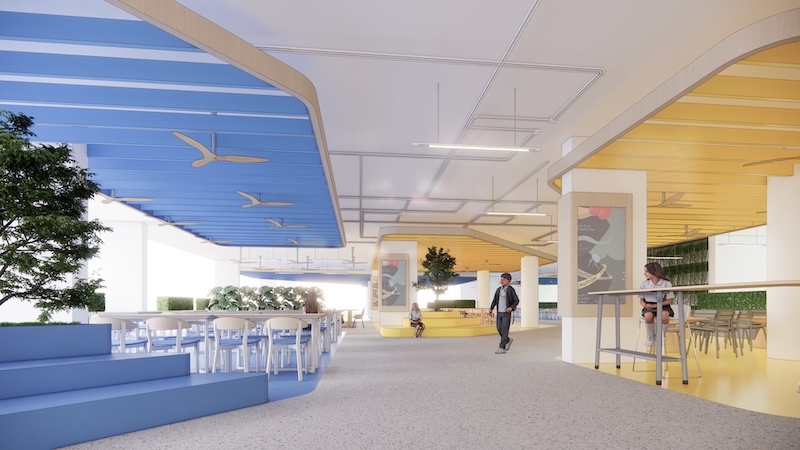
Collaboration rarely emerges by chance. It needs to be deliberately designed for. This principle shaped some of the biggest campus moves, including a second internal spine through courtyards and social spaces, the placement of coffee and food as social catalysts, and open team rooms that de-privatised practice. As a result, leadership became more visible, parents more involved, and the campus began to operate as one connected learning community rather than three separate schools.
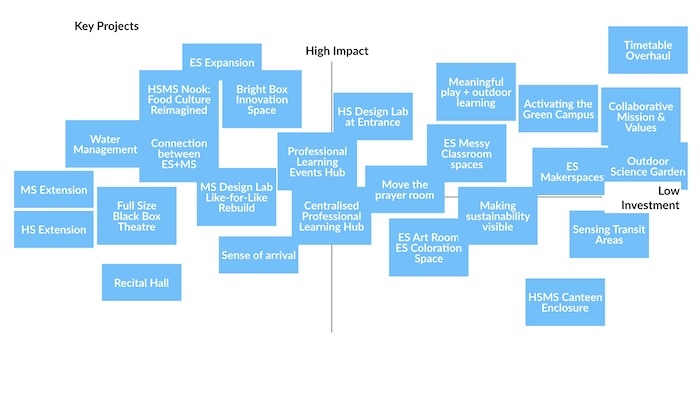
We developed a hierarchy of needs, showing which projects would deliver greatest value at least cost
Co-design and engagement: building a vision the community could own
We worked closely with school leaders, teachers and students to capture multiple perspectives on how the campus was experienced day to day. Structured workshops and conversations surfaced both pride and frustration, helping the community articulate what mattered most and where change would be meaningful.
This collaborative process ensured the emerging vision felt authentic, shared and rooted in the culture of the school.
Outcomes and impact: a clear framework for future decisions
The project resulted in a unifying campus vision that now guides how ISKL thinks about space, growth and investment. This enabled:
- A shared understanding of how the campus supports learning and community
- Clear principles to guide future building and refurbishment projects
- Stronger alignment between educational ambition and physical environment
- Greater confidence in long-term planning and capital investment decisions
With this framework in place, ISKL can now approach future development strategically, ensuring that each change strengthens the school’s identity and supports its learners over time.