How to waste a stadium by trying to please everyone
At a glance
Question: What happens when a brief tries to satisfy everyone?
For: School leaders, boards and teams writing a design brief.
Takeaway: Name whose experience matters and make the trade-offs explicit.
The Stadio delle Alpi was built in Turin for the Italia ’90 World Cup. You can imagine what the brief should’ve been: create a football stadium that people around the world will see on television (make it look good) and that some of the world’s most passionate football fans and players will visit (make it work for the spectators and players).
How, then, did the Stadio delle Alpi get demolished before its 20th birthday?
The answer comes down to the specification, or ‘brief’. The stadium was designed to accommodate football and athletics.
The Italian Ministry of Culture’s architectural inventory records that the stadium’s running track went unused and compromised the view for spectators.
The track meant that spectators of football matches were far from the pitch. Everyone knows the world’s best stadia create a feverish atmosphere because fans are piled close and high up around the pitch. That was hard to achieve at the Stadio delle Alpi.
For years Torino and Juventus shared the ground.
Juventus acquired a 99-year right to use and develop the site for €25 million. The stadium was largely demolished between 2008 and 2009, and Juventus built a ground with the stands closer to the pitch.
Our team builds (and rebuilds) some of the most beautiful schools in the world. By beautiful, we mean that the buildings work for the people who use them, gently opening up potential for new approaches teams have dreamed of, providing room for changing plans and future ambitions. And the spaces themselves bring a smile to your mind.
All of that beauty starts with a clear and simple design brief, where the people who will use the space are able to write down who they are, where they want to be, and why the current spaces they have hold them back from what they dream of doing.
When we write the brief, in our ‘Dear Architect’ letter, it achieves clarity that pushes the boundaries of what educators thought possible so that architects can draw them.
Often, though, the brief comes to us reading something like this: build this, please (followed by some bullet-pointed assumption-riddled spaces).
Compounding the assumptions behind what matters most is a perennial headache triggered by a word that some of the big-name, big-fee rockstar school architects promote as a school’s most prized design principle.
Flexibility.
Nothing could be further from the truth.
Flexibility infects architectural briefs and strategic planning with fog, obscuring what people really want or need.
Flexibility tends to give uncertainty a place to hide.
Flexibility creates ambitious fuzziness.
Flexibility glosses over the much more challenging idea that people don’t know what they don’t know.
If you want real flexibility, you first have to do the hard work of getting crystal clear on what matters most to you. You gain flexibility because you’re able to shed unnecessary baggage, freeing yourself from the weight of time, money and energy constraints that were tied up in work that wasn’t driving the team forward.
The next time you’re setting out on an ambitious project (building a space or building an idea), do not start by talking to the Chief Financial Officer, asking about the budget, the time, or how we can do more of what we’re doing today.
Start by asking the people who will use the space or the strategy what kind of experience they want to have next, in the future. Then audit all the other things they want to stop doing.
Design for what people need next, not for what they’ve been trying to shed today.
Try this
Pick one requirement marked ‘flexible’. Ask the people who will use the space to describe two concrete situations it must support. Decide which takes priority if the designs conflict.
Next: The most beautiful school in the world
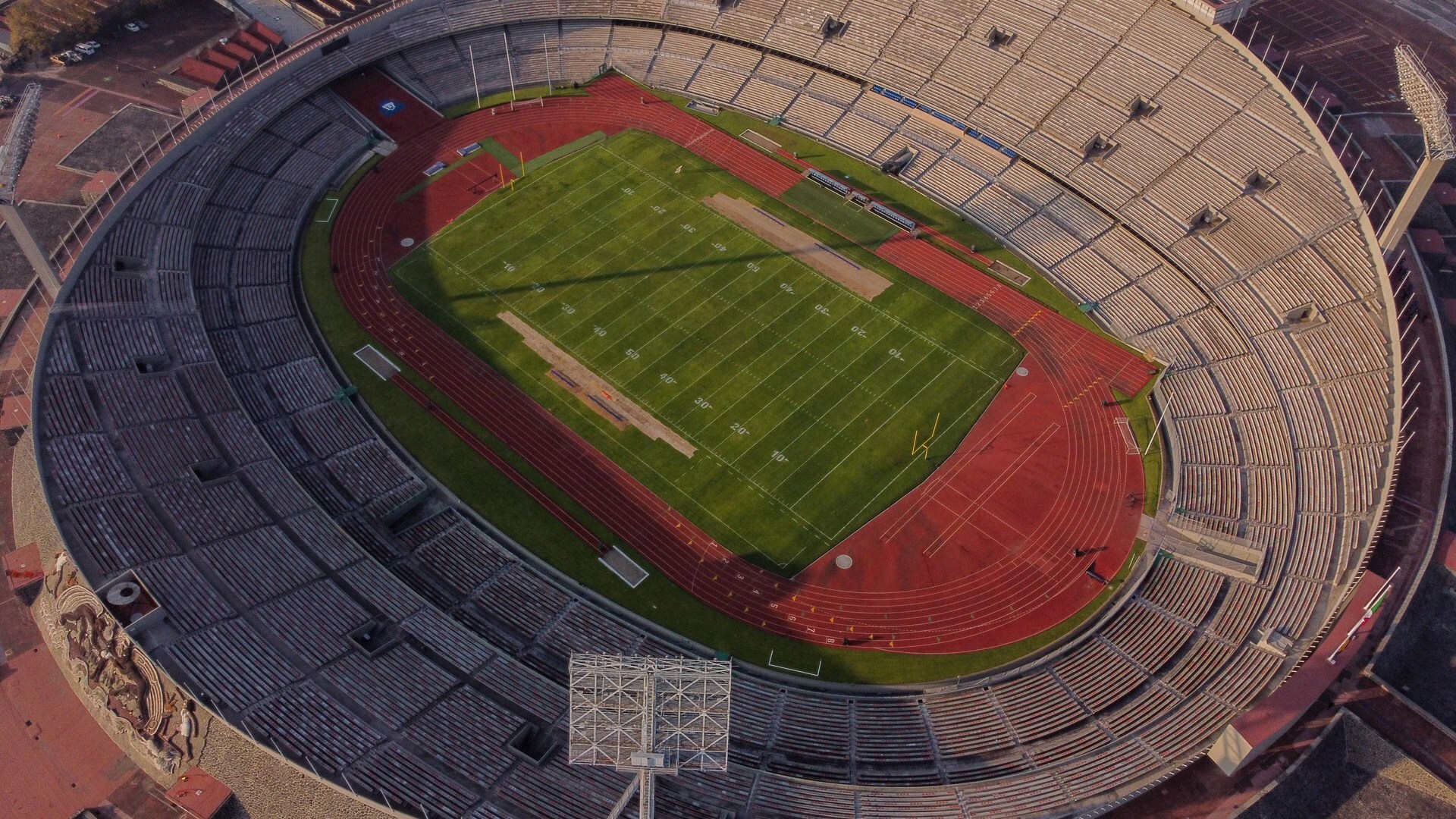
Header and card photograph from Pexels. The photograph shows another stadium.