The most beautiful school in the world
At a glance
Question: What does your building invite young people to notice?
For: School leaders, teachers and learning-space designers.
Takeaway: What pupils encounter on their way to class can provoke questions and open up learning.
For decades, Danish beer firm Carlsberg sold its beer under the advertising tagline Carlsberg. The best lager in the world. Probably. The self-aware doubtful confidence has meant many folk in Britain, at least, recognise the brand with just that one word: Probably.
In 2019, Carlsberg turned that claim on its head in its “Probably Not” campaign, which Marketing Week readers voted campaign of the year.
Humility and integrity win at the end of the day.
We work with schools on their strategy, creating their visions and purpose statements based on oodles of data gathered from the community and executive teams. We work with Boards to hone the direction of travel.
And 90% of the time we have a discussion with Board members about why they probably don’t need to tell people that their school is ‘excellent’. Academic excellence is something you have or you don’t.
Publish your annual exam results and let families decide for themselves whether you’re excellent academically. Stand at the school gates or hang out with parents waiting to pick up their kids from the sports game and you’ll work out if your school is excellent in any other ways.
But I’ve always felt that if schools have to tell you in blaring 24pt Times New Roman that they’re a centre of ‘academic excellence’, then their insecurities about that claim are laid bare.
Humility and integrity win at the end of the day.
Which brings me to a school my colleague Athole and I visited. We’ve worked with Odense International School and its Danish ‘mother’ school, Henriette Hørlücks Skole, to explore how they can plan the development of meta-skills intentionally throughout their whole curriculum.
We’re exploring how to frame powerful provocations that are more than just 'witty hooks’ for learning. We’re digging into how we design the development of meta-skills in lessons, units and whole curricula.
Walking up to the school we were nervous about the setup for the day: would the space help or hinder the message? Well, this school didn’t let us down.
It’s the most beautiful school in the world. Probably.
First of all, they do most of the stuff every school has to do and put up with most of the stuff every school has to. The IGCSE and Danish curricula, exams, timetabled lessons, hard-working teachers, a school campus that’s in the city, with all the constraints that come with that (there’s never enough outdoor space). They have accreditation visits from international bodies and inspections from the Danish government.
So far, so normal.
But the clues of something exceptional start on their website:
Den dag vi ligner andre skoler, lukker vi.
The day we look like other schools, we close.
Walking to the campus from the hotel, Google didn’t know where we should enter. The school is, in fact, a higgledy-piggledy collection of residential buildings, offices, an old school and public baths rescued from squatters and luxury home developers, by the current Director’s late father.
From the redbrick exterior we enter an environment that is going to be a gift when we try to land the ideas of “learning provocations” that are a struggle to bring to life in the white-washed, drywall rabbit hutch of a traditional classroom.
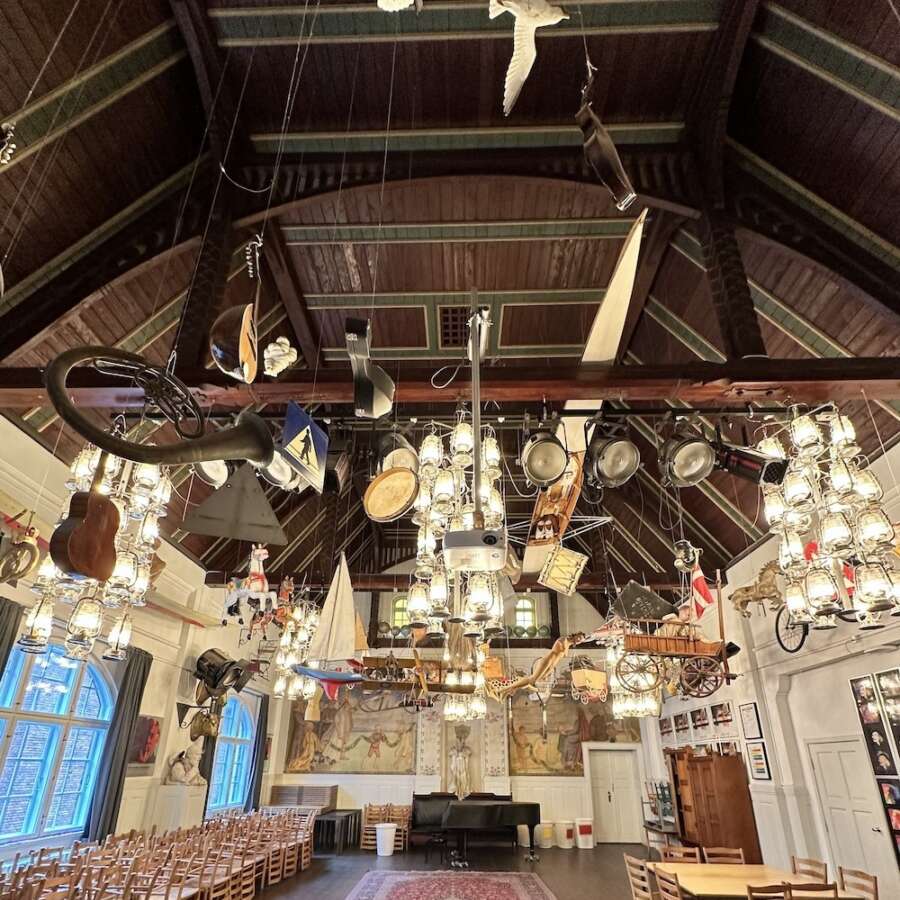
A hall full of surprises
Bicycles, model aircraft and chandeliers hang over the hall.
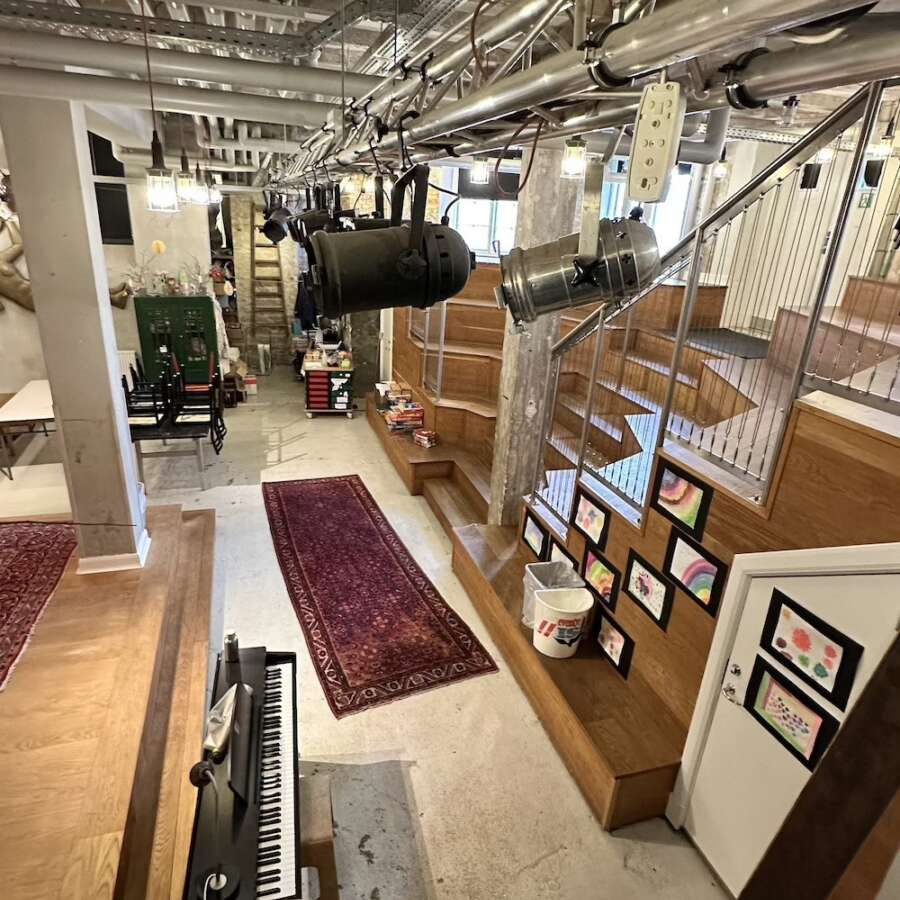
A lower level worth exploring
Stepped timber seating and a piano sit beneath exposed pipes and suspended objects.
See photos of the school in its own gallery.
When I created the original idea behind NoTosh, I wrote down that I wanted the firm to design the most beautiful schools in the world, inside and out. It’s an aspiration we hold on to tightly today, designing their strategy, learning, leadership approach and magical spaces.
This is a school space I wish we’d designed. But at least the space helps to design even more compelling learning, rather than working against us.
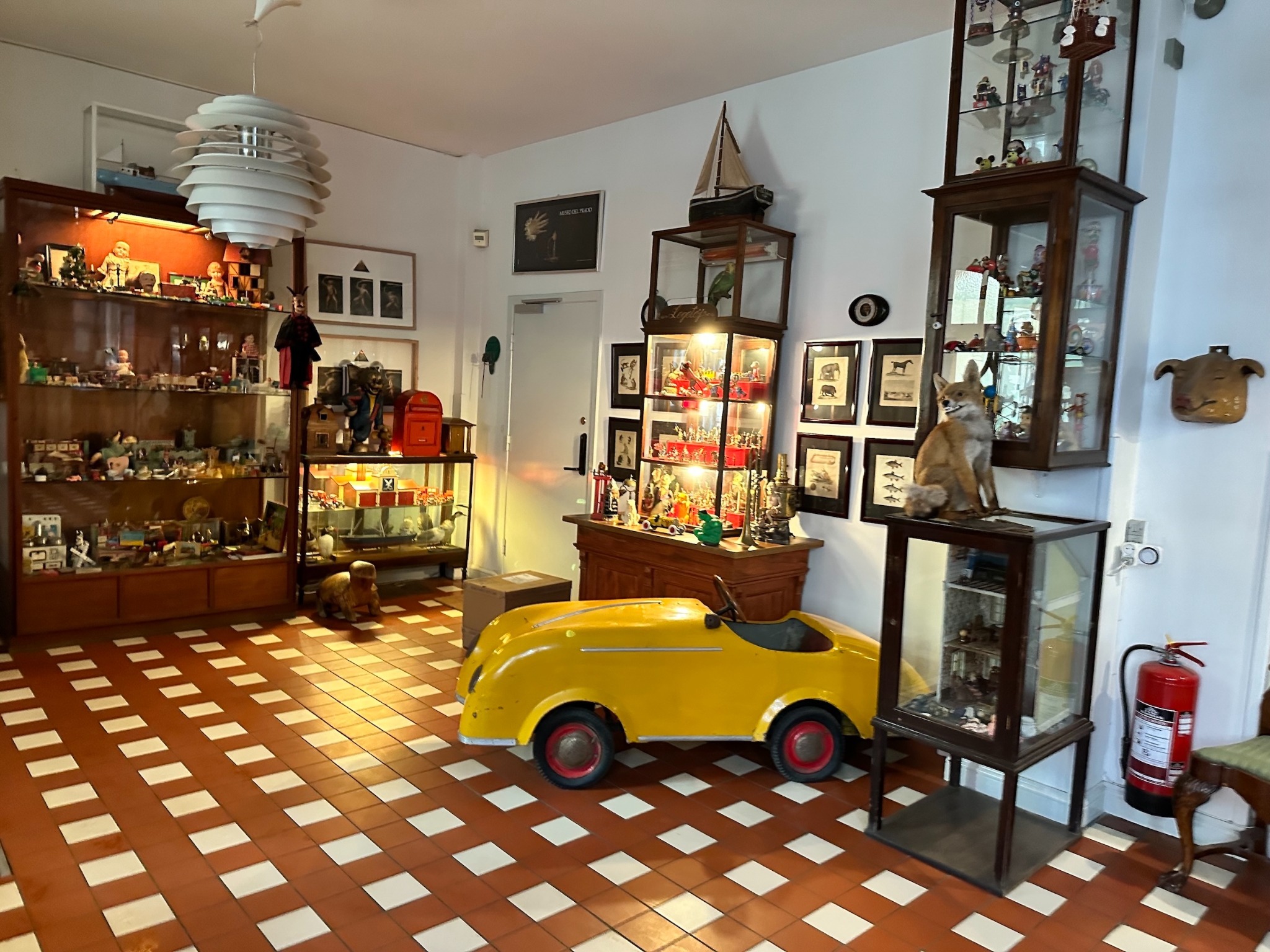
Director Henrik Nannestad Jørgensen created the current iteration of the school having spent years as a copywriter in advertising. And so the building is packed with artefacts that bring a smile to the mind.
Students see remarkable things every day.
Inspiring. Beautiful. Gnarly and odd, stunning and gracious. Counterpoints and juxtapositions.
An ostrich ordered on Amazon that looked like it was 10cm tall but which got delivered on a pallet off the back of a lorry.
It’s poetry as learning spaces go, a space that reflects the idea that the path to discovery could start anywhere: in front of a sculpture on your way to class or with wonderment over a stuffed wild boar on the grand piano at a morning assembly.
“School shouldn’t feel like a sterile prison of cells and bells,” says Henrik. “Young people should want to be here exploring every day.”
Many schools bang on about their ‘academic excellence’. But what I love about this school in Denmark is they don’t want to settle for excellence. They want to be exceptional, in every way.
The day they look like other schools, they close. There’s a promise worth keeping, a strategy to keep you alive.
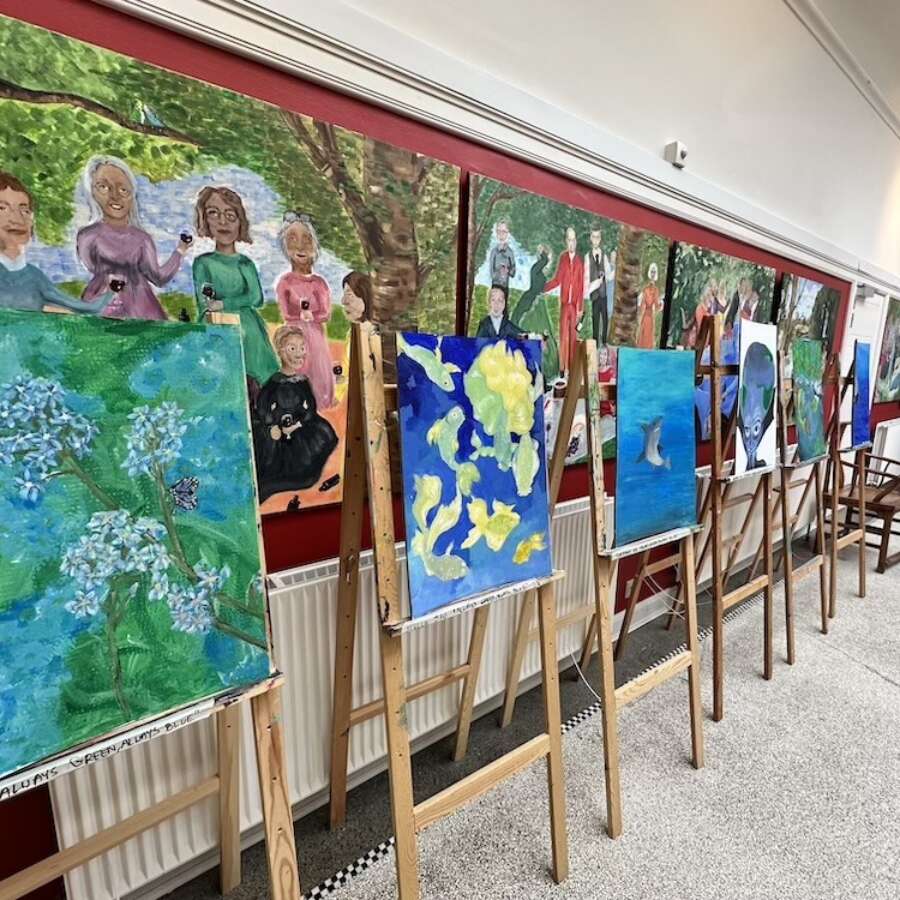
A corridor becomes a gallery
Paintings on easels bring colour and detail to the route through the school.
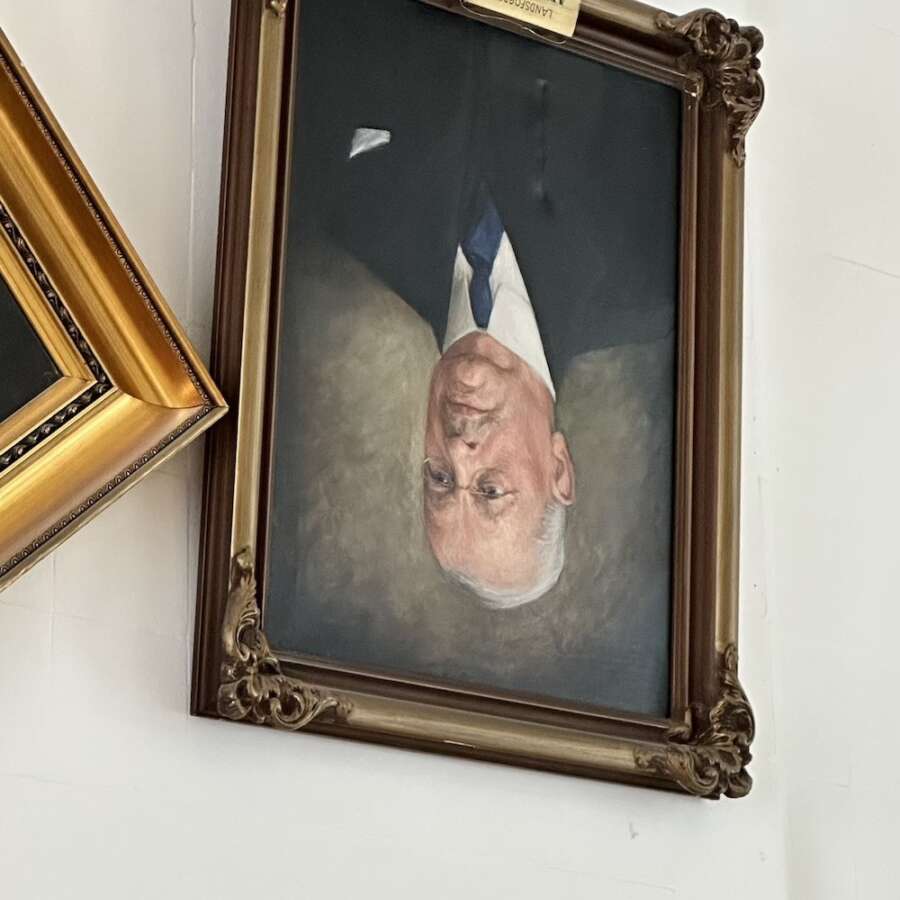
A portrait with a twist
A formal portrait hangs upside down.
Try this
Walk from the entrance to a classroom with a pupil. Ask them to show you something on the way that makes them stop, look or ask a question. Pick one place to try a small change.
Next: Design isn’t decoration: it’s decision-making.
Photography from the NoTosh visit to Henriette Hørlücks Skole in Odense.